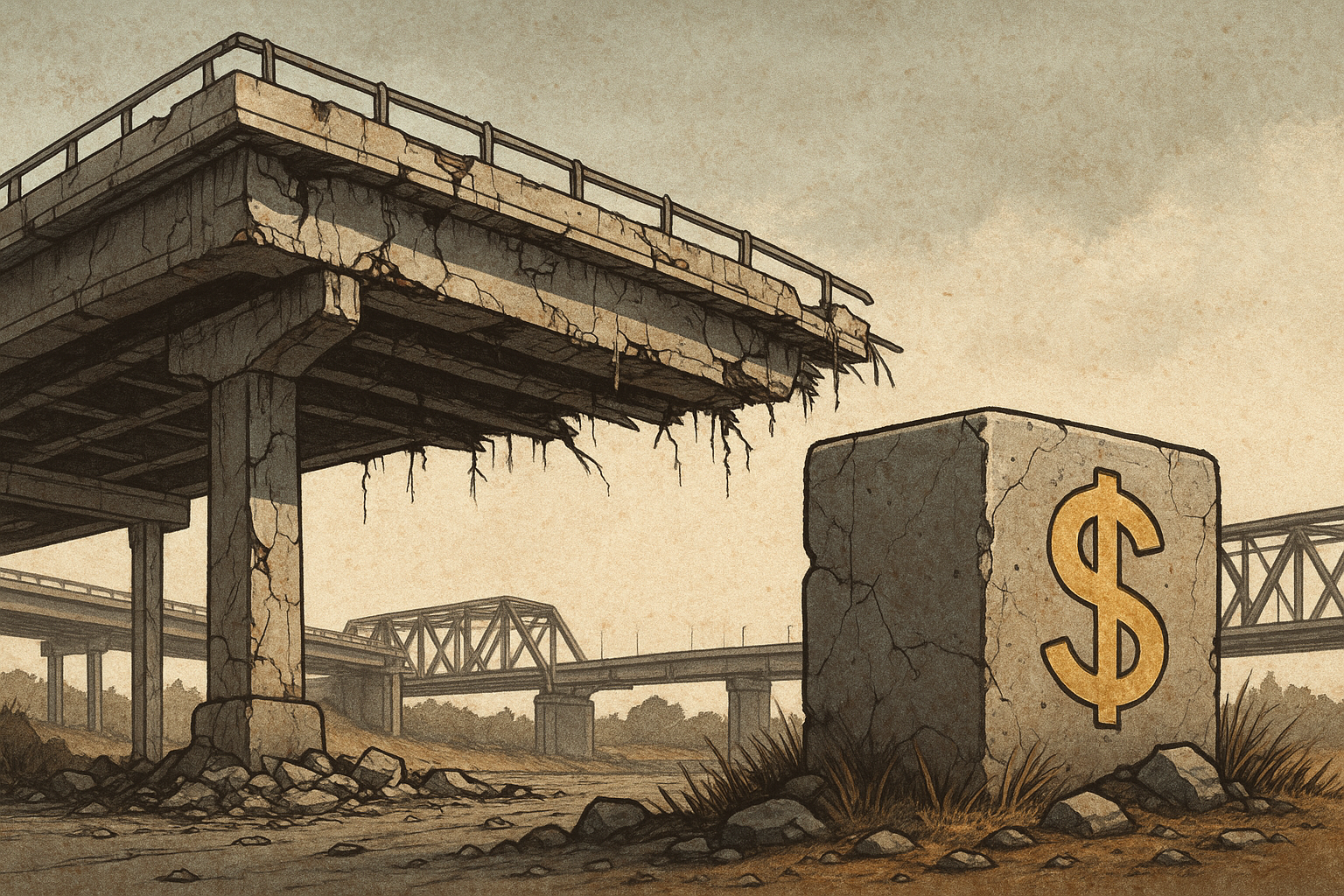
The United States built the world’s most impressive infrastructure network in the 20th century—highways connecting coast to coast, bridges spanning mighty rivers, water systems serving millions, and power grids lighting up cities. But today, much of that infrastructure is showing its age, and the cost of inaction is mounting.
The State of Our Infrastructure
According to the American Society of Civil Engineers’ latest Infrastructure Report Card, America’s infrastructure grades at a C-minus overall. This isn’t just about aesthetics or convenience—it’s about safety, economic competitiveness, and quality of life.
Consider these sobering statistics:
- More than 45,000 bridges across the country are rated as structurally deficient
- The average age of public transit buses has reached 9.4 years, well beyond their useful life
- Water main breaks occur every two minutes, wasting six billion gallons of treated water daily
- The Federal Highway Administration estimates that one-third of major roads are in poor or mediocre condition
The Economic Impact
Poor infrastructure doesn’t just inconvenience commuters—it carries a hefty economic price tag. Traffic congestion costs the U.S. economy an estimated $160 billion annually in wasted time and fuel. Businesses face higher transportation costs, which ultimately get passed on to consumers. And when infrastructure fails catastrophically—think bridge collapses or levee breaks—the costs skyrocket into the billions.
The World Economic Forum has warned that America’s infrastructure is falling behind global competitors. Countries like China, Germany, and Singapore are investing heavily in modern transportation, energy, and communication networks, while U.S. infrastructure continues to age.
The Funding Gap
Addressing America’s infrastructure needs requires massive investment. The American Society of Civil Engineers estimates that the United States needs to invest $2.6 trillion over the next decade just to bring existing infrastructure to acceptable standards. That doesn’t include building new infrastructure for future growth.
Traditional public funding mechanisms—gas taxes, municipal bonds, and federal appropriations—are struggling to keep pace. The federal gas tax, for instance, hasn’t been raised since 1993 and hasn’t kept up with inflation or increasing costs.
This funding gap has opened the door for private capital. Firms like American Infrastructure Partners are stepping in to finance, develop, and manage critical infrastructure projects through public-private partnerships. These arrangements can accelerate project timelines, bring operational expertise, and share risk between public and private sectors.
A Path Forward
Solving America’s infrastructure crisis requires a multifaceted approach:
Increased Federal Investment: The Infrastructure Investment and Jobs Act passed in 2021 represents a significant step forward, allocating $550 billion in new spending over five years. But sustained, long-term commitment is essential.
Innovative Financing: Public-private partnerships, infrastructure banks, and value capture mechanisms can supplement traditional funding sources and leverage private sector efficiency.
Smart Technology: Incorporating sensors, data analytics, and smart systems can extend the life of existing infrastructure and optimize performance.
Prioritization: Not all infrastructure needs are equal. Strategic planning can focus resources on projects with the greatest economic and safety benefits.
The infrastructure challenges facing America are daunting, but they’re not insurmountable. With political will, innovative financing, and strategic investment, the United States can rebuild its infrastructure foundation for the 21st century. The question isn’t whether we can afford to fix our infrastructure—it’s whether we can afford not to.
The clock is ticking, and every year of delay makes the problem more expensive and more dangerous. America built its way to prosperity once before. It’s time to do it again.